Updates coming soon
The next layer
of space infrastructure.
Your missions are limited
Your systems and services today are constrained by launcher performance and launcher availability.
We are challenging those operational limitations by building an interoperable orbital refuelling infrastructure.
We build the actual technical backbone for propellant transfer: standard refuelling Utility Interface, Refuelling Modules for a variety of in-space service vehicles and Drop Depots that make the assets reusable and provide the propellants from ground to the orbital infrastructure.
deltaVision enables interoperability of in-orbit services and refuelling
Across consumers and service providers for all storables, conventional and green, pressurants, as well as electric propulsion.









Earth orbit
refuelling infrastructure
Fundamental Layer + End-Consumers


Mobile end-consumer


Non-mobile end-consumer

Refuelling service vehicle


Drop Depot

Launch

De-orbit



Product
Utility Interface
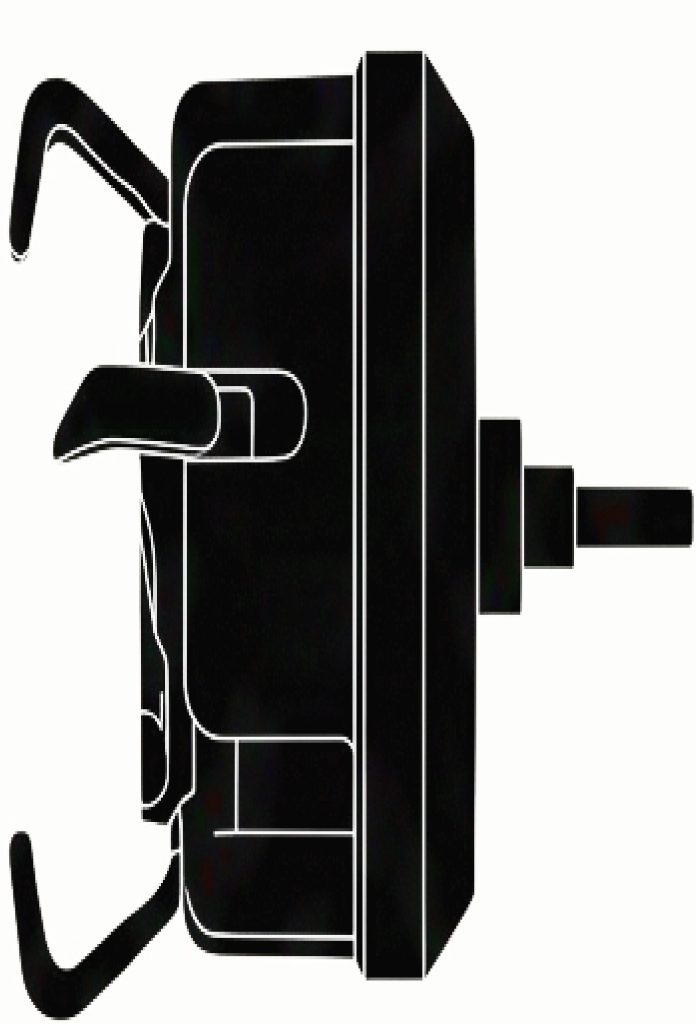
It’s the connection standard for the orbital refuelling ecosystem. The passive side specification is published as an open IRD. The utility interface handles mechanical docking, propellant transfer, and data exchange between all elements of the refuelling system
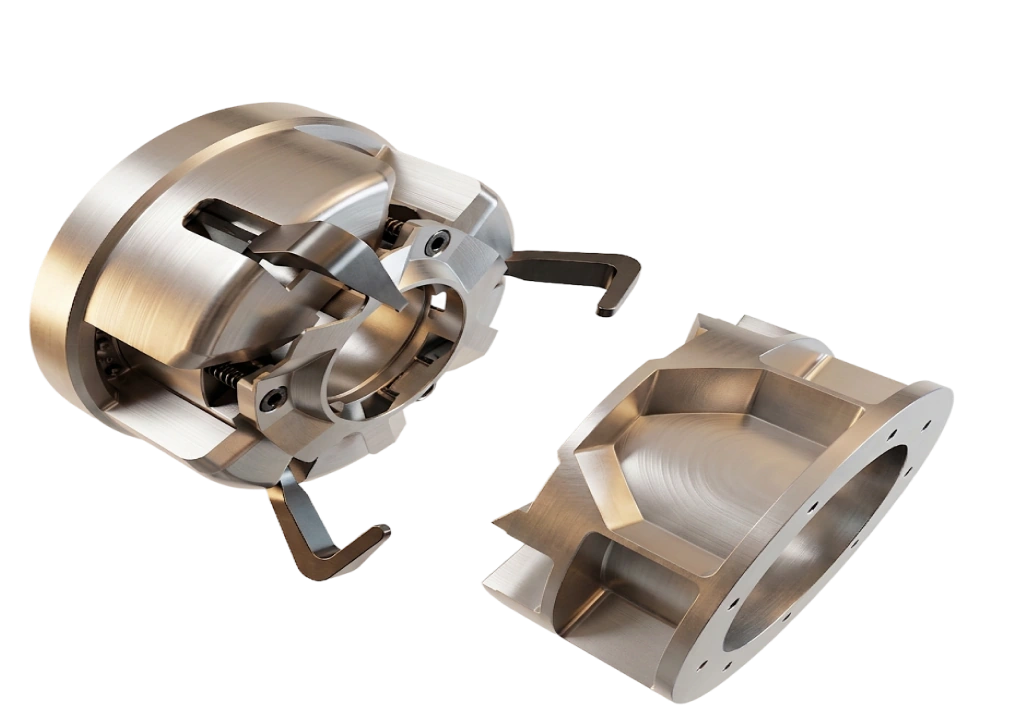
1 · Mechanical Capture
Capture, align, lock. Latches on the active side grapple the fixture on the client side and pull both vehicles together forming a rigid link.
2 · Active Utility Interface
All the complexity on one side. The active half sits on the Refuelling Module and drives mating, fluid, power, and data transfer.
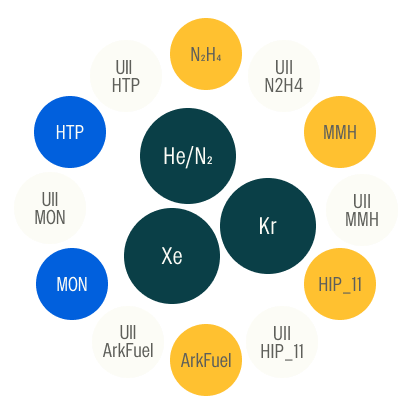
3 · Fluid Couplers
One interface, many fluids. The Utility Interface holds fluid couplers in standardised positions, so different couplers can be integrated for liquid propellants, electric propellants and pressurant gas. A configurable layout of fluidic couplers on the common Utility Interface design enables mission adaptability.
Product
Refuelling Kits
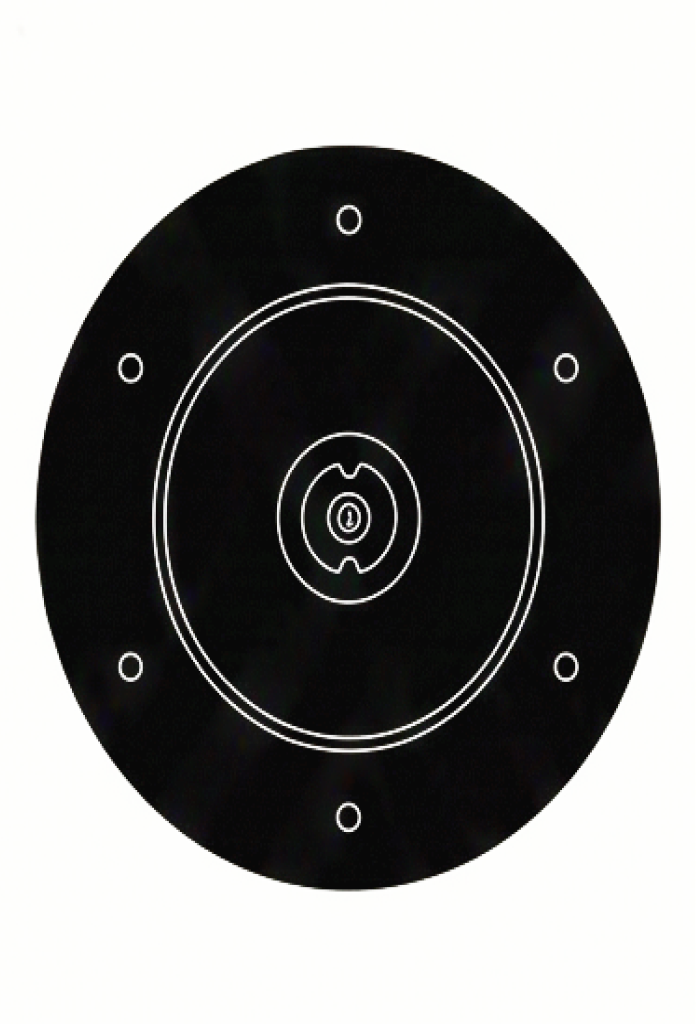
Refuelling Kits turn your propulsion systems into refuellable ones, with a true drop-in solution not requiring any additional modifications to the physical architecture. Includes mechanical docking fixture, up to 15 fluidic couplers, power & data connection and supporting elements such as heaters and isolations valves, configured according to the customer needs. Allows you to fuel your asset also on ground via deltaVision ground half coupling.
A drop-in kit that makes your propulsion systems refuellable, with no architecture changes. Includes docking fixture, up to 15 fluidic couplers, power and data connections, heaters and isolation valves, configured to your needs. Compatible with ground fuelling via the deltaVision ground half coupling.
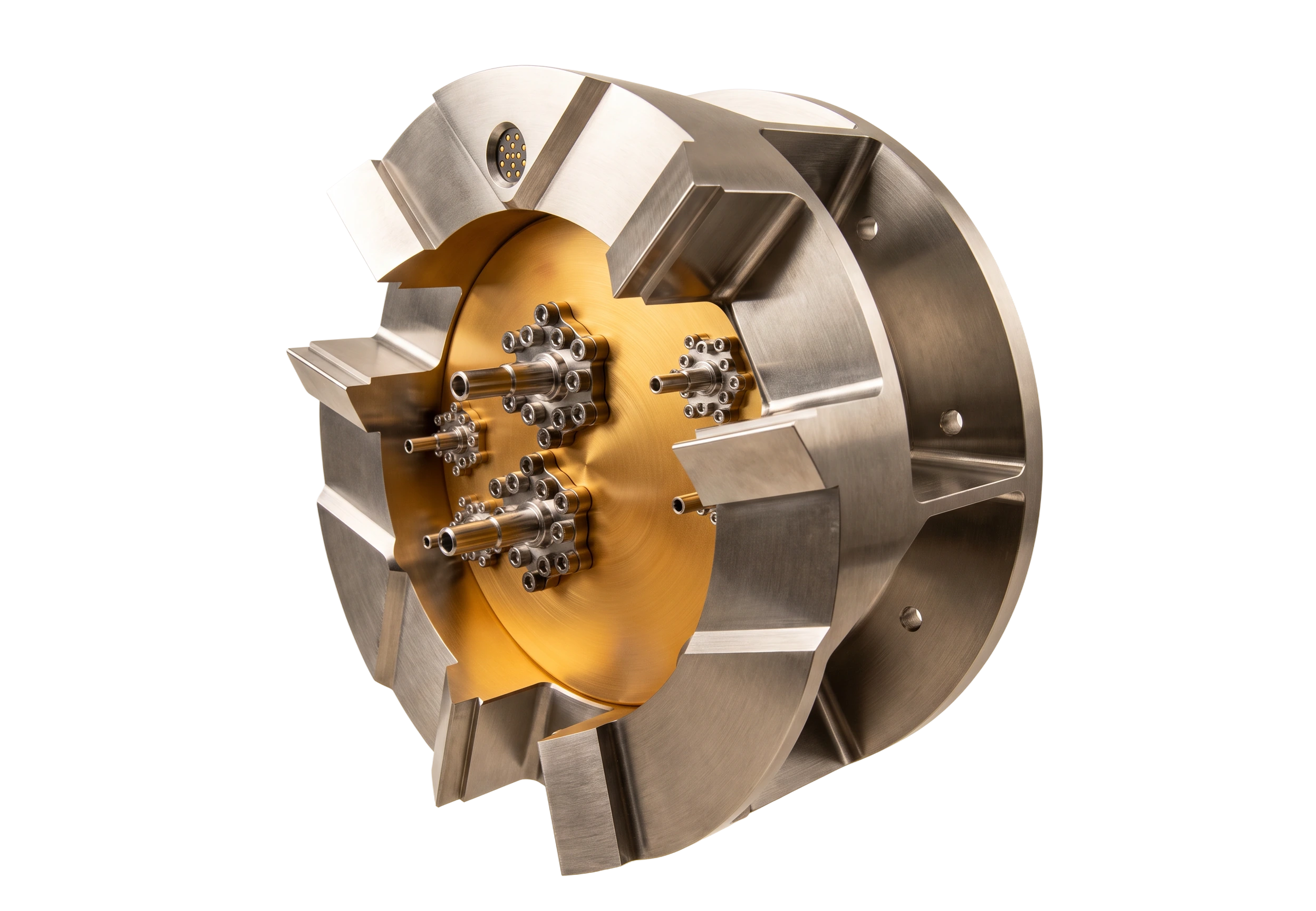
1 · Fits Multiple fluidic couplers
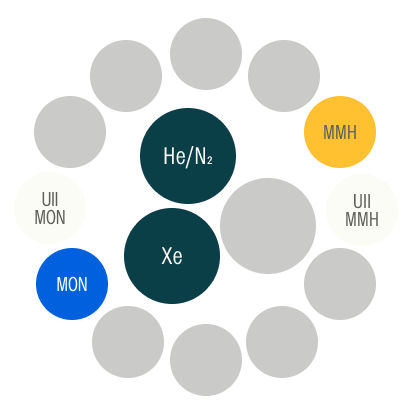
Configure as needed based on à la carte principle with up to 12 low pressure (28 bar) and 3 high pressure (310 bar) fluidic couplers.
 Close
2 · Power & Data connection
Allows power and data connection between your satellite and a servicing vehicle. Servicer spacecraft can operate heaters & valves via this connection independently: no need for additional electrical connections to run the kit on your spacecraft.
3 · Equipped Passive Utility Interface
Hosts everything necessary to make your satellite refuellable, including fluidic couplers according to your needs, heaters, and isolation valves according to chosen standards and customer needs.
Product
Refuelling Module
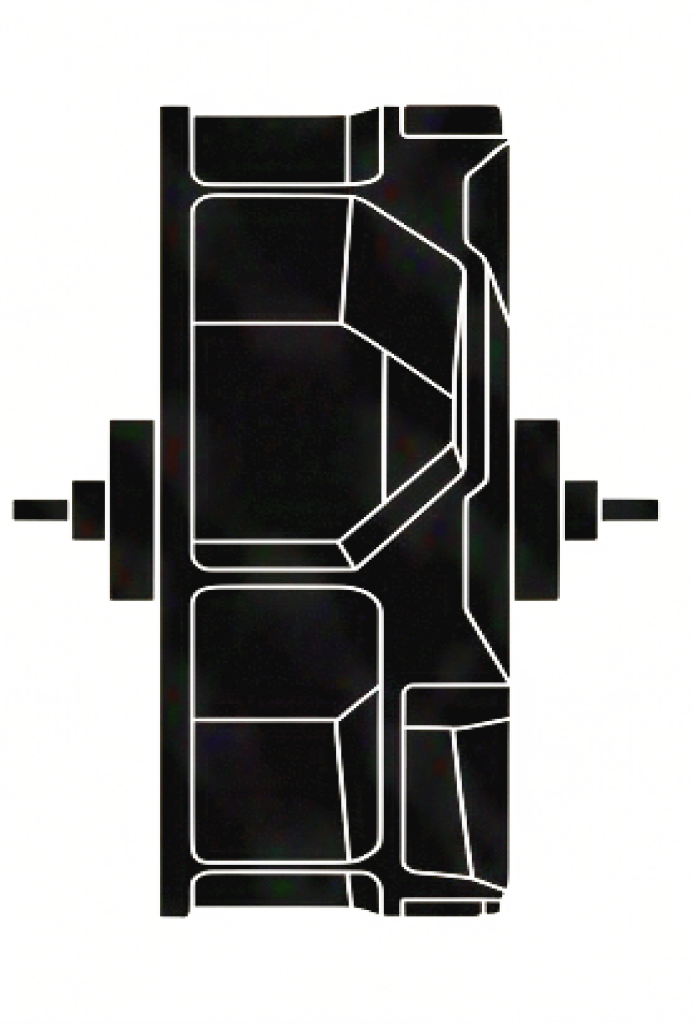
Refuelling Module is the first refuelling node in Earth orbit. Together with in-space servicing vehicles and Drop Depots, it lays the foundation for a reusable, interoperable refuelling infrastructure. It stores propellant and transfers it to client satellites through the Utility Interface, in a standardised, host-agnostic form factor.
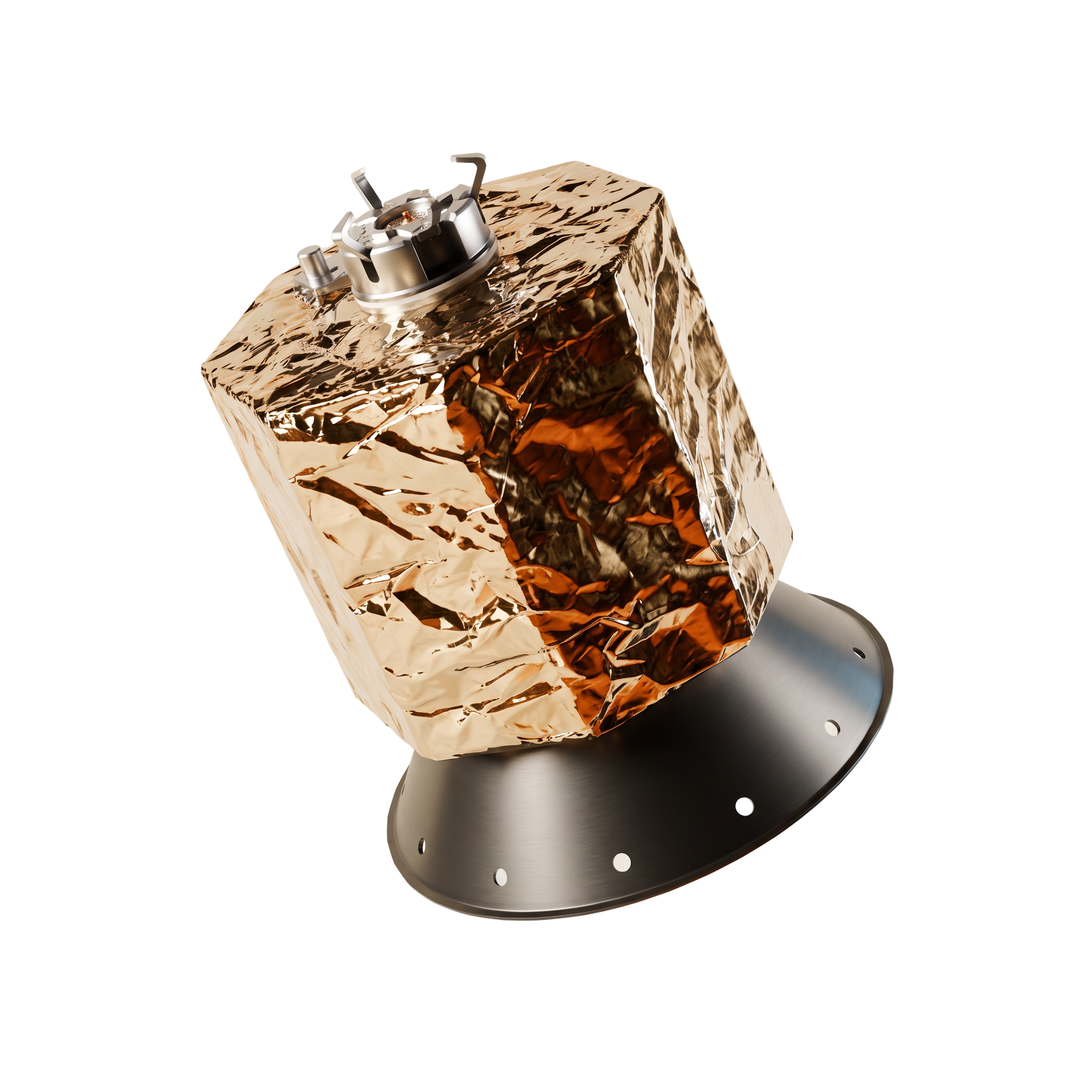
1 · Active Utility Interface
One interface configurable for all storable propellants & electric propulsion. An active mechanical gripper provides docking and rigid interconnect. Fluidic couplers activate individually and deliver the propellants and pressurants.
2 · Host-Agnostic Payload class Module
Compatible with a range of existing and future in-space service vehicles and orbital logistics nodes. Different configurations adaptable for propellant types, volume, depending on the customer needs.
Concept
Orbital
Drop depot
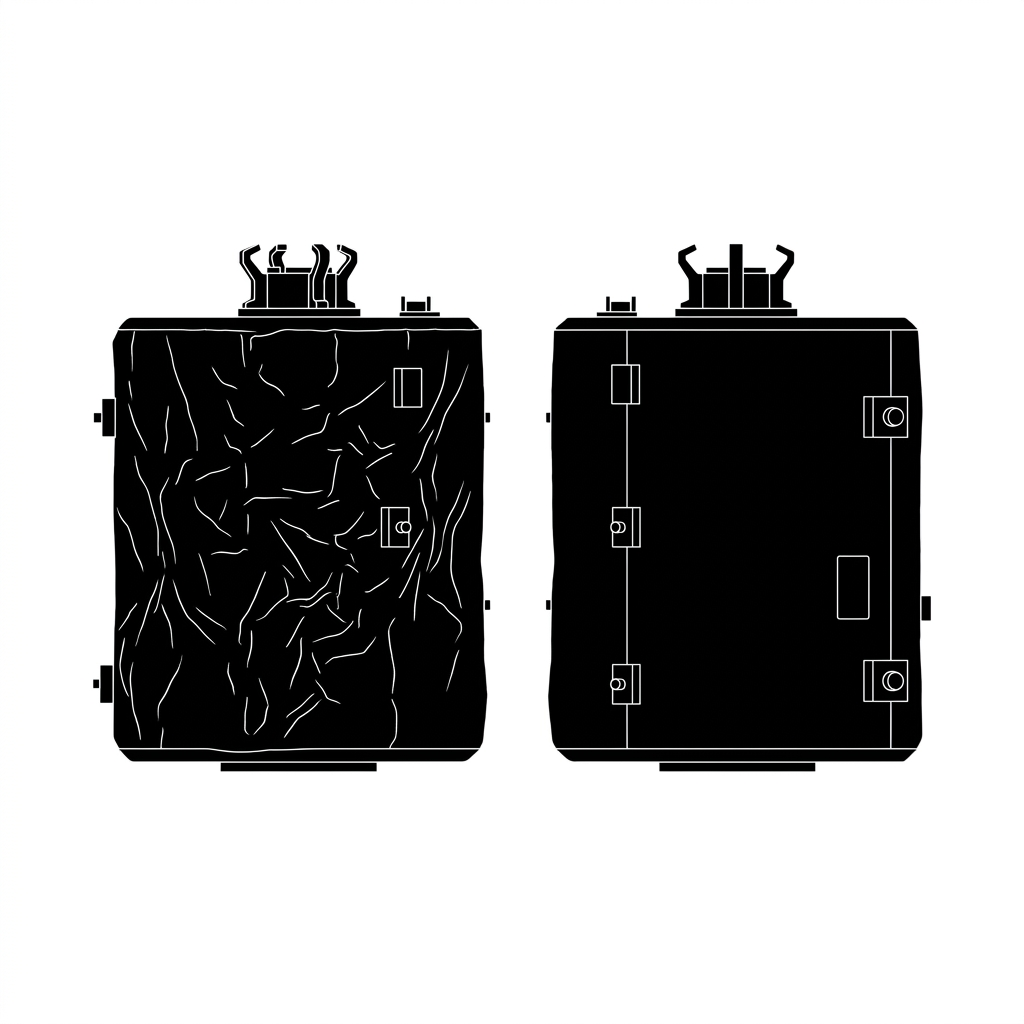
Launched on demand towards the servicer. The most cost efficient solution to refilling your Refuelling Module equipped vehicle in the early stages of orbital refuelling infrastructure.
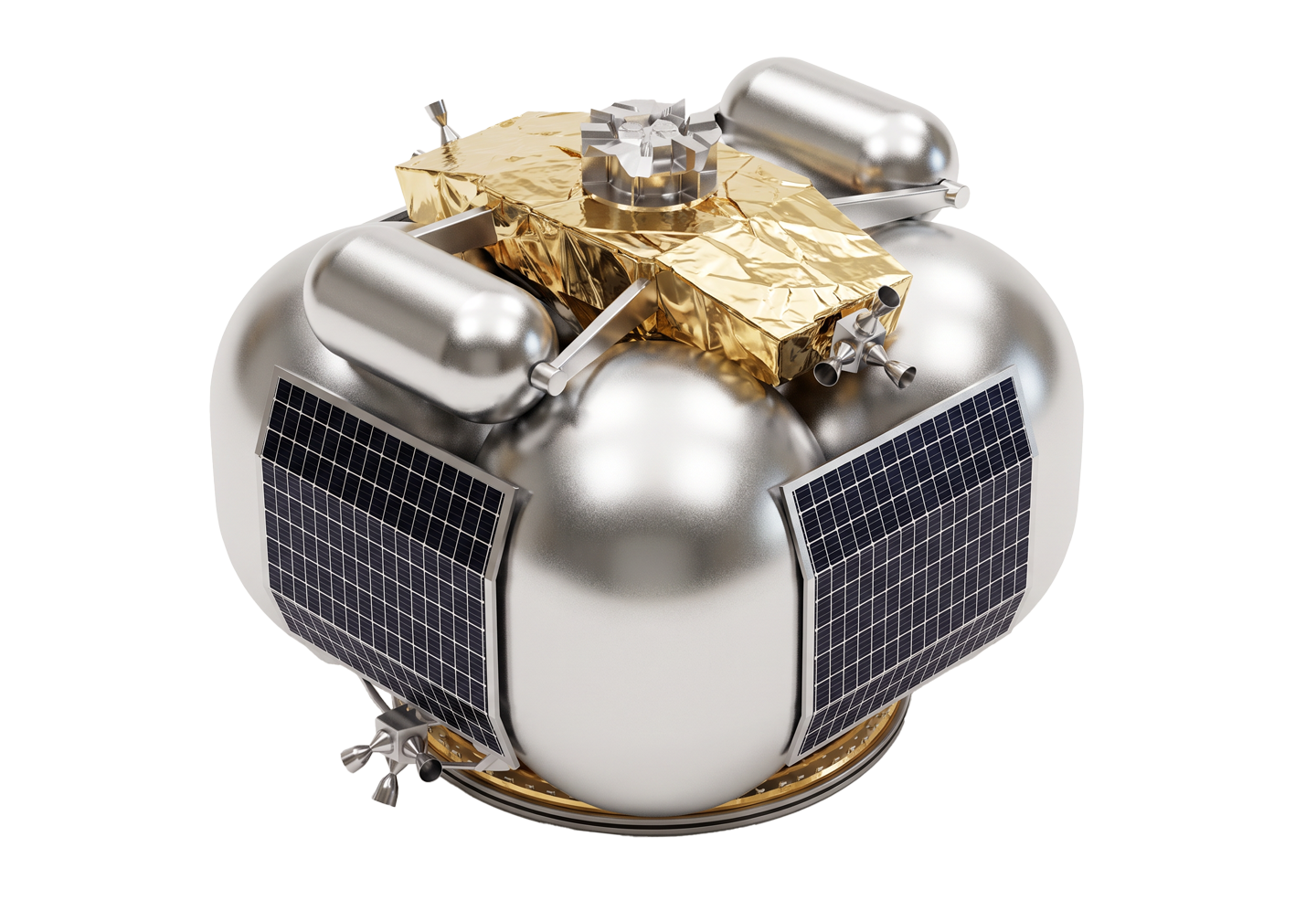
1 · Utility Interface passive side
Connects your service via Refuelling Module active side of the Utility Interface. Enables mechanical docking, power & data connection and fluidic coupling according to your Refuelling Module configuration.
2 · High-Pressure Storage
Pressurant and electric propellant to refill your servicer and its Refuelling Module. High-pressure vessels store xenon or krypton for electric propulsion, or pressurant for chemical systems. The tank mix is configurable to match the propellant demand in each orbit.
3 · Liquid Propellant Storage
Configurable tanks hold liquid propellant in orbit. The combination of tanks is modular, and the depot can grow in size and capacity as the infrastructure’s needs evolve.
Mythbusting
Objections and Rebuttals
Replacement is better?
This is a strong argument against refuelling, and it holds in one specific case: where the payload is genuinely obsolete and a replacement would earn materially more. But it assumes the fuel and the technology run out together, and they do not. Novaspace’s 2026 white paper on in-orbit refuelling finds that most satellites are retired not because their hardware fails, but because their propellant runs out. Propellant depletion is set by traffic, drag and disposal rules; payload obsolescence is set by market and technology cycles. A satellite whose tank empties early because it spent five years dodging debris is not obsolete, it is stranded — and replacing it buys capability the operator was not asking for at the price of a full spacecraft, a launch slot and a service gap.
It is also worth being precise about what actually goes out of date. On most spacecraft that is the payload: the transponders, the sensor, the processor. The platform underneath it does not age at the same rate. Solar arrays and batteries degrade on a known curve, structure and thermal control have a long lifetime, and propulsion, attitude control and TT&C are mature subsystems that can work as well in year twelve as in year one. Replacing a satellite to get a better payload means throwing away a bus that is still perfectly good, and paying to build, qualify and launch its replacement.
That is why in-orbit upgrade and refuelling belong together rather than in competition. A servicer that can rendezvous, capture and transfer propellant has already solved the hard parts of docking a new payload onto an existing platform — the same interface serves both. Do the two together and the operator keeps a working bus, gets current payload technology onto it, and gets the tank filled so it can keep manoeuvring. The upgrade restores the capability; the fuel is what lets the platform go on using it.
We need to solve refuelling now, and further servicing can follow.
Cost and economics
Launch is cheap; satellites are not, and time is not. A large GEO or high-reliability spacecraft is a multi-year build, and even after launch there are weeks to months of orbit raising and commissioning before it starts generating value. If a working asset can keep flying for the cost of a propellant delivery, the comparison is not launch price versus refuelling price – it is a fuelling bill versus a launch price plus new spacecraft plus the revenue lost while waiting for it.
Cheap launch also assumes launch is available. Replacement needs a slot on a specific vehicle in a specific window, and that supply is concentrated in a handful of providers: a grounding after an anomaly, a manifest backlog or an export-control hold pushes the whole queue right, and the operator absorbs the delay. Propellant is the easier payload to move. It is small, storable and provider-agnostic, so it can ride on whatever is flying rather than waiting for the one vehicle that can lift a full spacecraft.
Finally, cheaper launch cuts both ways, and it cuts harder in refuelling’s favour. Propellant is the cargo that benefits most from falling launch prices: it is dense, it has no schedule sensitivity, it needs limited fairing volume and it can fill the spare mass on any rideshare. Every step down in launch cost lowers the price of a delivery to the refuelling infrastructure by more than it lowers the price of a new spacecraft, whose cost is dominated by the build, not the ride. Cheap launch is helps build a refuelling infrastructure, not the argument against one.
They close because of what each kilogram buys. A kilogram of new satellite lifted to orbit buys a kilogram of structure, avionics and payload, most of which duplicates hardware already flying. Due to a favourable structural index of propellant delivery, a kilogram of propellant cheaply buys months of manoeuvring life for the whole vehicle – bus, payload, licence, orbital slot and customer contracts included. The saving is not that fuel avoids launch; it is that fuel is the only mass that needs to be launched, and it is the cheapest, densest and least schedule-sensitive mass there is.
True per unit today, and less true every year. Constellation spacecraft are getting larger, more powerful and more expensive as on-board compute, direct-to-device payloads and higher power budgets arrive. More importantly, constellations may turn out to be the best case for refuelling infrastructure, not the worst: many identical vehicles, in a small number of planes, with a common docking interface, is exactly the demand profile that makes a refuelling depot economic. A servicer in a constellation plane does not hunt for customers; it works its way along a queue.
The usual counter is that constellation operators replace their fleets on a short cycle by design, to refresh the technology. That is true, and it is addressed under obsolescence below. The short version: the refresh cycle is set by the payload, the disposal date is set by the propellant consumption, and the two don’t always coincide. Refuelling lets the operator retire a satellite when it is out of date rather than when it is out of gas.
Risk and trust
Approaching a live satellite carries real failure modes: contact damage, propellant leakage, debris. But the risk is engineering risk, not physics risk, and it has been retired in stages. Orbital Express showed autonomous transfer two decades ago; robotic fluid transfer has been run on the ISS; commercial docking in GEO has now been sustained for years across multiple vehicles. The alternative is also far from risk-free – launch and early orbit remain the most dangerous phase of any mission. The right response is standardised interfaces, published proximity-operations practice, and licensing conditions, making RPOD a common and safe operation.
The same was said of buying launch from a third party, of outsourcing the ground segment, and of letting an insurer’s engineers into the design review. Operators hand their spacecraft to outside parties at every stage of its life already; servicing is one more handover, and the first GEO operators to try it have signed follow-on contracts rather than walking away. Trust here is built the way it is built everywhere else in the industry: through a published interface, a track record, and a contract that says who pays if it goes wrong.
Market scope and technology
That framing dates from when fuel went almost entirely on stationkeeping. Today it also goes on collision avoidance – large constellations report tens of thousands of manoeuvres per reporting period – on mandated disposal, and on holding altitude through space weather: the February 2022 geomagnetic storm cost Starlink a whole batch of newly launched satellites. No pre-launch budget can size that accurately; refuelling makes it adjustable in flight. Defence users are also moving to Dynamic Space Operations, which only work when manoeuvres are not rationed against a fixed tank. The threat is real: in October 2026 Russia’s Cosmos 2612 closed to within a few hundred metres of the commercial radar satellite ICEYE-X36 after earlier approaches in May, while in GEO Russia’s Luch/Olymp satellites have spent a decade shadowing Western communications satellites. Russian commentators describe the aim plainly: force targets into evasive manoeuvres until their propellant runs out. In response, US Space Command is calling for Dynamic Space Operations built on on-orbit refuelling, and the US Space Force is funding refuelling demonstrations and rehearsing rapid rendezvous with VICTUS HAZE. Refuelling is what lets an operator manoeuvre without regret – and because servicers are propellant-limited too, it also underpins debris removal and inspection.
Electric propulsion extends how far a given tank goes; it does not make the tank infinite, and it makes each manoeuvre slower, which is the wrong direction when avoidance windows are short. Higher efficiency lowers the mass of a refuelling delivery, which improves refuelling economics rather than removing the need for one.
Boil-off is a genuine constraint for hydrogen and, to a lesser degree, for methane and oxygen. It is not a constraint for the storable & EP propellants – hydrazine, MON/MMH, HTP and its fuel pairs, xenon, krypton – that the overwhelming majority of operational satellites actually use, and which sit in tanks for a decade or more without active cooling. Cryogenic depots are a harder, later problem tied to deep-space architectures; the near-term commercial market does not depend on solving it first.
Insurance and liability
For insurers, refuelling takes risk away rather than adding it. The biggest worries in a satellite policy – running out of fuel early, being unable to dodge a collision, failing to deorbit – all become manageable once the asset can be serviced in orbit. A refuellable satellite also has a way back from the unforeseen: a propellant shortfall can be topped up, a drifting or disabled spacecraft can be recovered, and disposal no longer depends on a fuel estimate made years before launch. Regulators are reinforcing this with ISAM licensing that requires filed plans, traceable records and proof of financial cover. Every servicing operation carried out under these published rules leaves less for insurers to guess at – and makes the asset easier to insure.
Sustainability
It does the opposite. The satellites that clutter congested shells are the ones that ran dry: unable to manoeuvre, unable to deorbit on schedule, and left to whoever has to avoid them. A satellite that can be refuelled can guarantee its own disposal, and a servicer that can refuel can also tug what cannot be saved. Refuelling also means fewer replacement launches, less new mass placed in orbit and fewer upper stages left behind. Sustainability regulators are moving towards shorter disposal deadlines and stricter manoeuvrability requirements; those rules are far easier to meet with a tank that can be topped up than with one that was sized to a guess a decade earlier.
The interface belongs to everyone.
A refuelling ecosystem needs a common standard before it needs anything else. deltaVision publishes the interface specification openly, builds the active hardware precisely, and leaves the rest of the chain to the industry.
These are the programmes already running on that model.